
Keeping Fish in a Wildlife Pond: What to Consider
Fish and wildlife: a difficult mix
Everyone who builds a pond eventually faces the same temptation: a few fish would look lovely. They do, of course. But it is worth understanding what you are trading away, because a fish pond and a wildlife pond are pulling in opposite directions, and no amount of clever planting entirely removes the tension.
The problem is what fish eat. Goldfish, rudd, tench and sticklebacks will all take frogspawn and tadpoles when they get the chance. They graze on insect larvae, water fleas, small snails, damselfly nymphs and the young of newts. In a pond where fish are present, you tend to see far fewer amphibians and a thinner range of invertebrates, and the species that survive are often the ones that bury themselves in mud or breed fast enough to outpace predation. Fish also stir up sediment as they root about, clouding the water and releasing nutrients that feed algae rather than water plants.
None of this means keeping fish is wrong. It means being deliberate about it, and accepting a pond that is more fishpond than nature reserve.
Choosing fish with care
The fish you choose matters enormously. Koi and common carp are the worst offenders — they grow large, root through planted margins, and need serious filtration. Fancy goldfish are nearly as demanding and are best left to a dedicated fish pond. If you want fish in a pond that still has some wildlife value, smaller and less destructive options work better:
- Golden rudd — lively surface feeders, tolerant of planted ponds, though still fond of tadpoles.
- Tench — peaceful bottom feeders that tolerate warm, low-oxygen water better than most. They do stir sediment, but less violently than carp.
- Golden orfe — elegant shoaling fish, but active and quick to hunt invertebrates.
- Three-spined sticklebacks and minnows — native, small, and happy in modest ponds, though they will still eat spawn and larvae.
Whatever you pick, keep numbers low. One or two small fish in a well-planted pond will cause a fraction of the damage of a shoal, and the pond will look after itself far better. Never release fish into a wild pond, stream or canal — it is illegal for non-native species and can introduce disease to native populations.
Getting depth, volume and planting right
Fish need space in a way that frogs do not. A tiny barrel pond can be a wonderful wildlife feature, but it cannot carry fish. As a rough guide, aim for at least 1,000 litres, and preferably considerably more, with a good depth of water that stays cool in summer and does not freeze solid in winter.
Design the pond so that:
- At least some of the water is 60–90 cm deep, ideally approaching a metre, giving fish somewhere to retreat from heat, herons and hard frost.
- There are planted shallow margins for spawning and cover, plus deep-water plants such as hornwort or water crowfoot for oxygen and shelter.
- Roughly half the surface is shaded by water lilies, floating heart or lily-like leaves. This keeps the water cooler and starves algae of light.
- One side has overhanging grasses, iris or marsh marigold, so insects and amphibians have somewhere to hide and climb out.
Avoid sloping the whole pond like a bowl. Steep sides reduce the area where fish can grub through the mud, and ledges give plants a chance to establish.
Feeding less than you think
Overfeeding is the single most common mistake in a fish pond. It fouls the water, feeds algae and, in a wildlife pond, draws in rats and encourages ducks to linger. In a well-planted pond, fish find a great deal of their own food — algae, insect larvae, water fleas — and a small number of rudd or tench may need almost no supplementary feeding at all.
If you do feed, offer a small pinch of pellets or flake once a day at most, and only what the fish clear within a couple of minutes. Stop feeding entirely when water temperatures drop below about 10°C; the fish become largely inactive and uneaten food simply rots.
Routine care through the year
Fish change the care calendar. In spring, check for spawning activity and thin out excess blanketweed by hand rather than reaching for chemicals, which are risky for amphibians. Through summer, top up with rainwater rather than tap water where possible, and keep an eye on oxygen levels during warm, still spells — a fountain or small solar air pump can help without turning the pond into a machine.
In autumn, remove fallen leaves before they sink and decay. In winter, never smash ice on the surface; the shock waves can injure fish. Place a pan of hot water on the ice to melt a hole instead, which helps gas exchange. Herons are a genuine threat to fish in shallow ponds, so keep deep water and plenty of cover, or use a taut line strung above the surface.
If wildlife comes first
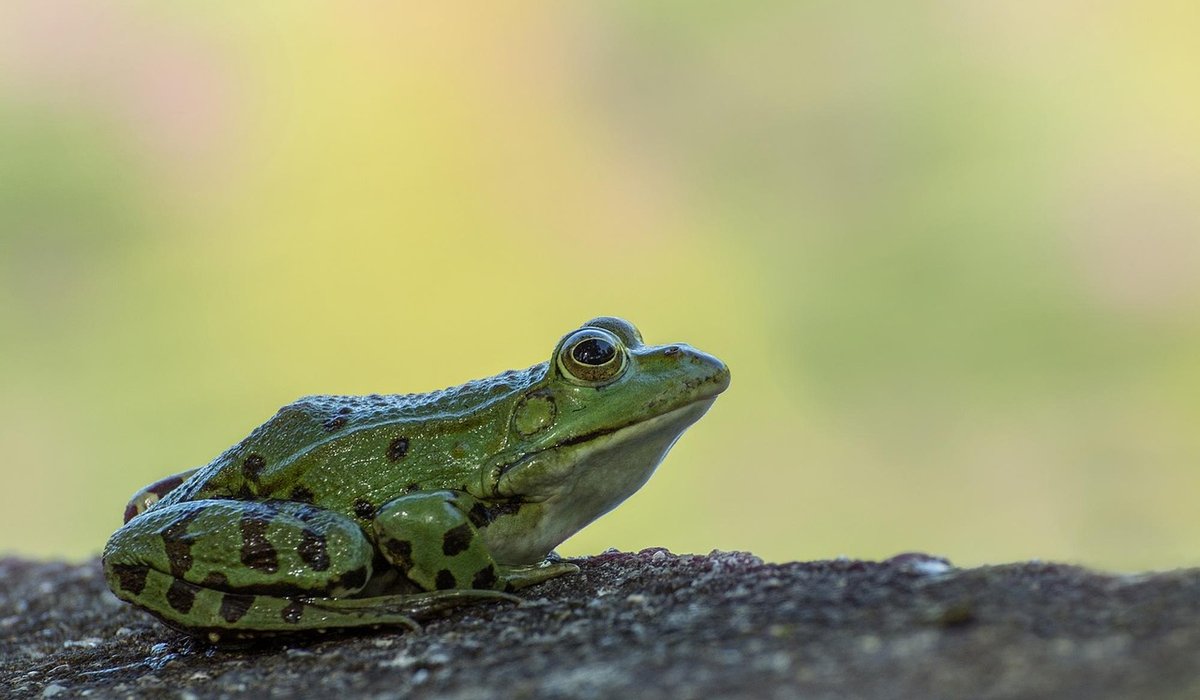
If your priority is frogs, newts, dragonflies and the widest possible range of pondlife, the most honest answer is to leave fish out altogether. Amphibians will usually find a new pond within a year or two, entirely on their own, and the invertebrate life that follows is extraordinary.
A good compromise is two water features: a fish pond with proper filtration and depth, and a smaller fish-free pond, bog garden or raised trough nearby. The fish-free water will quickly fill with water beetles, damselflies and tadpoles, while the fish pond gives you the movement and colour you were after. Both can be beautiful — and each will do its job far better than one pond trying to do everything at once.
tag: Ponds

Eleanor Finch Author
Create a log pile, leaf mound, or compost heap beside your pond. Frogs and toads will burrow into the damp, frost-free layers to survive winter.
YOU MAY ALSO LIKE
Making a Hibernation Spot for Frogs Near Your Pond
Jul 20
10A waterfall adds gentle movement, improves aeration, and creates soothing sound. It also helps prevent stagnation and supports beneficial bacteria.
read more
The Benefits of Adding a Pond Waterfall to Your Garden
Jul 17
10Lift baskets in spring, split tough root balls with a knife, and replant in fresh aquatic compost. This keeps plants healthy and prevents overcrowding.
read morePonds
-

ERRIC CATONA
Keep a simple notebook of sightings, water clarity, and plant growth. Regular observations reveal patterns and help you manage your pond sensitively.
May 19, 2016 at 5.12 pm
Reply
ERRIC CATONA
Start by choosing a sunny spot away from trees, then dig varied depths and add a liner. Native plants and a gentle slope will soon attract wildlife.
May 19, 2016 at 5.12 pm
Reply -
ERRIC CATONA
British native pond plants like water forget-me-not and marsh marigold provide shelter for insects and help keep water clear throughout the year.
May 19, 2016 at 5.12 pm
Reply
Wildlife
Your email address will not be published.