
Summer Pond Care to Prevent Overheating
Why summer heat puts a pond under stress
Still, warm water is the enemy of a healthy pond. As the temperature climbs through the twenties, dissolved oxygen drops — warm water simply holds less of it than cold water — while the metabolism of every fish, amphibian and invertebrate in there speeds up, so they need more oxygen just when there is less to go round. Add long, bright days that fuel algae and blanketweed, and a heatwave can turn a clear wildlife pond into a green, gasping puddle within a fortnight.
The risk is highest in small ponds, shallow shelves and anything in full sun. A pond that is sixty centimetres deep or more will hold a cool layer near the bottom, which is a genuine refuge. A shallow bowl in the middle of a lawn has nowhere to hide.
The good news is that most of the remedies are cheap, gentle and rather pleasant to do on a warm evening.
Shade your pond before you do anything else
If you change one thing this summer, change how much sun reaches the water. Aim to have roughly half the surface shaded at midday — enough to take the sting out of the sun without turning the pond into a dark, stagnant pit.
- Floating plants are the quickest fix. Water soldier, frogbit and native water lilies spread fast in warm weather and cool the water directly beneath them.
- Tall marginals such as yellow flag iris, purple loosestrife and marsh marigold cast dappled shade and give dragonflies somewhere to perch and emerge.
- Submerged oxygenators like hornwort and water starwort compete with algae for nutrients and release oxygen while the sun is up.
- A pergola, sail shade or simple awning over part of the pond works beautifully, especially if you grow a climber over it. Use 40–50% shade netting rather than solid cover if you want a cheaper option.
- Plant the south and west edges with shrubs or tall perennials — a soft, leafy screen is often more effective than anything you place in the water itself.
Never let floating plants carpet the whole surface. Leave open patches so frogs can surface, birds can bathe and gases can escape.
Top up little and often, and never in full sun
Evaporation in a heatwave can drop a small pond by several centimetres a week, and a falling water level concentrates everything dissolved in it. Top up in the evening, when the temperature difference between the added water and the pond is smallest.
- Rainwater from a butt is ideal — soft, free and chemical-free.
- Tap water must be treated with a dechlorinator before it goes anywhere near fish or amphibians. Chlorine and chloramine are genuinely harmful.
- Add gradually. A slow trickle from a hose on a low setting, or a couple of watering cans at a time, is far kinder than dumping in fifty litres at once.
- Do not do a dramatic water change. Replacing a third of the pond in one go causes swings in temperature, pH and hardness that stress every creature in it. Topping up is not the same as changing.
Keep the water moving — especially overnight
Oxygen levels are lowest just before dawn, because plants stop photosynthesising at night and actually consume oxygen themselves. This is why you may see fish gasping at the surface on a still, hot morning, and why pumps matter most in the small hours.
- Run pumps, filters and airstones 24 hours a day through the summer. Switching them off at night to save electricity is a false economy.
- A fountain, spitter or small waterfall that breaks the surface is worth more than a powerful pump that only stirs the depths.
- An air stone placed in the deepest part of the pond keeps the cool layer oxygenated.
- If you have no power nearby, a battery-powered air pump is a reasonable emergency measure during a heatwave.
Signs that oxygen is critically low include fish hanging at the surface, frogs behaving lethargically and a faint, unpleasant smell. Act immediately: increase surface movement and add cooler water slowly.
Plants, fish and the small jobs that make a difference
Feed fish sparingly in hot weather — they eat less, and uneaten food rots and drags oxygen down further. Remove blanketweed by twirling it out with a cane rather than reaching for an algaecide; chemical treatments kill algae in bulk, and the decomposition that follows can strip the oxygen from your pond overnight.
Leave tadpoles, froglets and newt larvae well alone, and keep a shallow, pebble-edged ramp at one end so hedgehogs, birds and amphibians can drink and climb out safely. A stone or two placed in a bucket of water is not a pond — wildlife needs an escape route.
Deadhead and trim marginals if they start to flop into the water, and clear fallen leaves promptly. If your pond is shallow and shaded by nothing at all, a simple floating raft of watercress or a potted lily will make more difference than you would expect.
A simple summer routine
- Morning: glance at the pond. Clear water, fish behaving normally, no gasping — carry on.
- Evening: top up the level if it has dropped, using treated or rainwater.
- Weekly: remove excess blanketweed and duckweed by hand, check the pump is clear, and pull out any dead plant material.
- In a heatwave: check twice daily, add shade if you can, and keep circulation running around the clock.
- Never: drain and refill, add untreated tap water, or use algaecides in hot weather.
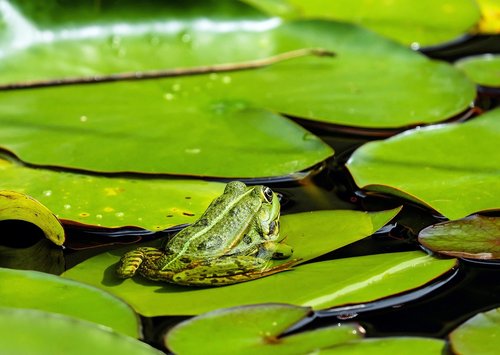
Do these few things and your pond will come through the summer with its water clear, its wildlife thriving, and its frogs still plopping off the lily pads when you walk past.
tag: Seasonal

Eleanor Finch Author
Use a sturdy waterproof container, add gravel and native plants, and place it in partial shade. Even a tiny pond supports insects and frogs.
YOU MAY ALSO LIKE
Building a Small Container Pond for a Patio
Aug 26
10Dragonflies need still water, emergent plants for perching, and nearby shelter. Avoid fish and pesticides to make your pond a successful breeding site.
read more
How to Attract Dragonflies and Damselflies to Ponds
Aug 24
10Rainwater is free from chlorine and helps maintain natural pH. Collect it in a butt and add slowly to avoid disturbing pond life.
read morePonds
-

ERRIC CATONA
Marginal plants like irises and rushes soften pond edges and filter nutrients. Plant them in baskets to control growth and make maintenance easier.
May 19, 2016 at 5.12 pm
Reply
ERRIC CATONA
Newts favour ponds with plenty of submerged plants and no fish. Add rocks and log piles nearby for shelter, especially during breeding season.
May 19, 2016 at 5.12 pm
Reply -
ERRIC CATONA
Test for pH, ammonia, nitrite, and nitrate regularly. Most pond life prefers a pH between six and eight, so adjust gradually if needed.
May 19, 2016 at 5.12 pm
Reply
Wildlife
Your email address will not be published.