
Natural Ways to Control Pond Weeds Without Chemicals
Why Chemicals Have No Place in a Wildlife Pond
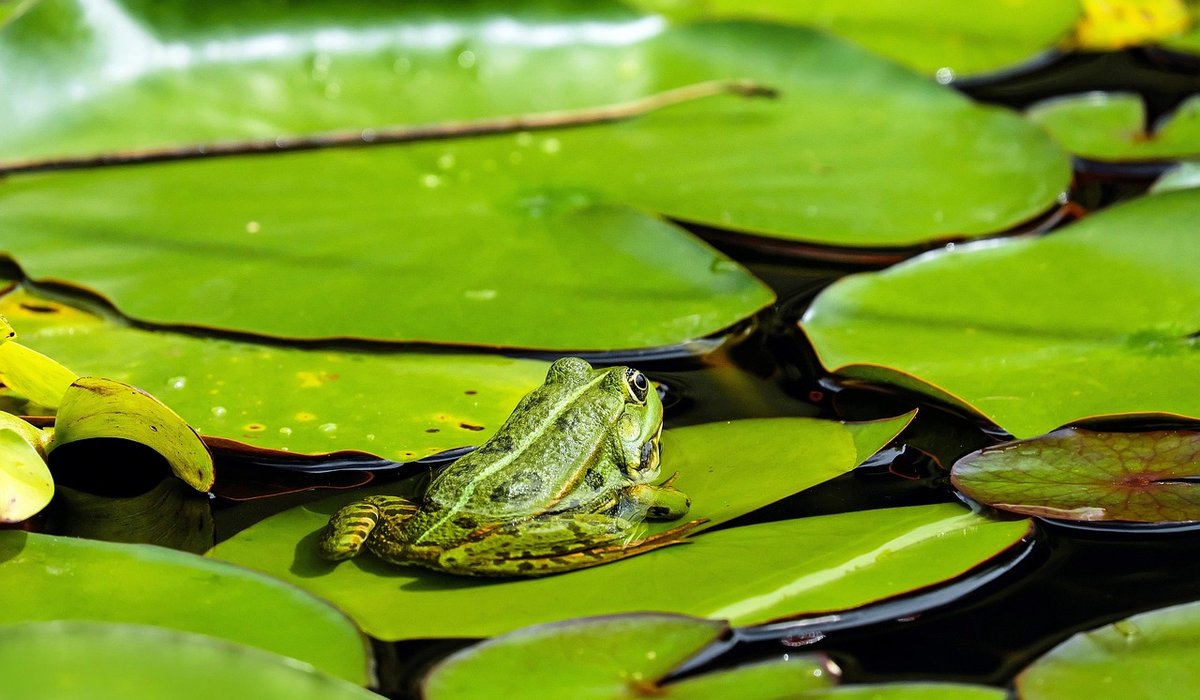
If you have gone to the trouble of digging a pond to attract frogs, newts, dragonflies and hedgehogs, the last thing you want is a bottle of algicide undoing all that good work. Most chemical pond treatments are indiscriminate. They may knock back blanketweed or duckweed, but they also strip the oxygen, kill the tiny invertebrates that tadpoles feed on, and accumulate in the bodies of amphibians that spend their whole lives in the water.
Frogs and newts breathe partly through their skin. Anything dissolved in the water passes straight into their bloodstream, which is why amphibians are among the first creatures to suffer when a pond is dosed. Even products sold as "wildlife safe" can cause problems when the temperature rises and oxygen levels drop. The good news is that a well-balanced pond rarely needs them. In nearly thirty years of managing garden water, I have found that the three tools below — your hands, barley straw, and clever planting — will handle almost every weed problem a British garden can throw at you.
Hand-Pulling: The Simplest Tool You Own
There is no substitute for getting in there and pulling weeds out by hand, and spring is the time to do it. From late March, when the water warms to around 10°C, submerged weeds such as hornwort, Canadian pondweed and the dreaded New Zealand pygmyweed (Crassula helmsii) begin to grow fast. Left alone, they will smother everything by July.
Work from the bank with a long-handled rake or, in a small pond, in wellies, and twist the weed into a bundle before lifting. Twisting rather than yanking means you remove the whole strand and get less debris floating free to re-root. Put the wet weed on the bank for a day so that any trapped tadpoles, water boatmen and snails can crawl back into the pond, then compost it well away from the water's edge.
- Aim to remove no more than a third of the submerged plant mass at any one time.
- Leave the weed in a heap overnight — you will be amazed how much life returns to the pond.
- Never dump pond weed on a compost heap within flooding distance of another watercourse.
- Check the weed for smooth newt eggs, which are wrapped individually in folded leaves.
Duckweed is a different beast. It reproduces by simply splitting in two, so every fragment you miss becomes a new plant. Skim it off the surface with a fine net every few days in summer and rinse the net over a bucket before returning any livestock to the pond. Consistent skimming for a fortnight will break its dominance far more effectively than any chemical.
Barley Straw: Slow, Gentle and Proven
Barley straw has been used in British ponds for centuries, and modern trials at the Centre for Ecology and Hydrology confirmed it genuinely does suppress algae, though the mechanism is still not fully understood. As the straw decays in oxygenated water, it releases compounds that inhibit new algal growth. It does not kill existing algae, so think of it as prevention rather than cure.
The key is timing. Put barley straw in during early spring, before the water warms and the algae gets going. Use roughly 50g of loose straw per square metre of surface area, or buy ready-made mesh pouches, which are far tidier. Suspend the straw just below the surface where the water is richest in oxygen, and anchor it with a brick so it does not blow about.
Barley straw needs about six weeks to start working, and a single dose usually lasts four to six months. If you have a very small pond or a container water feature, a barley straw extract is a reasonable alternative, though it is less effective. Never use more than the recommended amount — rotting straw consumes oxygen and can kill fish and amphibians faster than the algae ever would.
Plant Competitively, Not Desperately
The most elegant weed control is competition. A pond with a dense fringe of marginal plants and a good covering of floating-leaved natives leaves little light and fewer nutrients for weeds to exploit. Aim to cover roughly half the water surface with floating leaves by midsummer — water lilies, fringed water lily and broad-leaved pondweed are all excellent, and all are native.
Around the margins, plant in earnest: purple loosestrife, marsh marigold, water mint, lesser spearwort and soft rush will all draw nutrients out of the water and shade the shallows where blanketweed likes to start. These plants also provide emergence cover for dragonfly larvae and egg-laying sites for frogs.
- Use aquatic compost, not ordinary garden soil, to avoid leaching nutrients into the water.
- Skip the fertiliser tablets in a wildlife pond — you want the water nutrient-poor.
- Divide overcrowded marginals every few years to keep them vigorous.
- Add a few oxygenators such as water starwort, but remember they still need thinning.
If your tap water is high in phosphates, top up with rainwater from a butt instead. Nutrients are the real driver of weed and algae growth, and every little reduction helps.
Small Features Need a Lighter Touch
A half-barrel, a stone trough or a buried bucket will never support the same balance as a proper pond, so keep expectations modest. Stick to one or two small oxygenators, a single dwarf water lily if there is room, and a barley straw pouch the size of a teabag. Empty and refill a small feature once a year in early spring, scrubbing the sides with a stiff brush rather than any cleaner. A child's plastic rake or a pair of long tweezers will deal with the rest.
Even a modest water feature, managed patiently and without chemicals, will reward you. Within a season you should see damselflies, pond skaters and the first croaking frogs. Slower, gentler methods are not just kinder — they are, in the long run, far more effective.
tag: Maintenance

Priya Patel Author
A shallow pebble beach lets birds and mammals drink safely and gives amphibians an easy exit. Grade the slope gently for access.
YOU MAY ALSO LIKE
Designing a Pond with a Wildlife-Friendly Beach Area
Aug 2
10Flexible rubber liners suit irregular shapes, while preformed shells are quicker to install. Consider lifespan, UV resistance, and local soil conditions.
read more
Choosing the Right Pond Liner for Your Garden
Jul 27
10Fish eat frogspawn and insect larvae, so they reduce wildlife value. If you keep them, provide deep water, shaded areas, and careful feeding.
read morePonds
-

ERRIC CATONA
Create a log pile, leaf mound, or compost heap beside your pond. Frogs and toads will burrow into the damp, frost-free layers to survive winter.
May 19, 2016 at 5.12 pm
Reply
ERRIC CATONA
A waterfall adds gentle movement, improves aeration, and creates soothing sound. It also helps prevent stagnation and supports beneficial bacteria.
May 19, 2016 at 5.12 pm
Reply -
ERRIC CATONA
Lift baskets in spring, split tough root balls with a knife, and replant in fresh aquatic compost. This keeps plants healthy and prevents overcrowding.
May 19, 2016 at 5.12 pm
Reply
Wildlife
Your email address will not be published.