
Autumn Pond Care Tasks for British Gardeners
Autumn is the season that sets up next spring
By early October, most British garden ponds have already slipped below 15°C, and by November many will be hovering around 8°C. Fish slow down, plants stop growing, and the single biggest annual load of organic matter — fallen leaves — arrives in the space of a few weeks. What you do between now and the first hard frost decides how clear the water looks in April and how much wildlife comes back to breed. The good news is that the work is light, it takes a few afternoons, and half of it involves deliberately doing less.
Keep the leaves out — but not every last one
A fine-mesh net stretched tautly over the surface is the single most useful autumn purchase. Choose a mesh of around 10mm, peg it slightly above the water so it cannot sag, and empty it every few days through peak leaf fall. Ash, sycamore, willow and horse chestnut are the worst offenders, but even a modest drift of leaves breaks down into a sludge that consumes oxygen, releases nutrients and feeds next spring's blanketweed.
Use a skimmer or a long-handled net to lift leaves from the shallow shelves before they sink, and gently scoop any that have already collected in the shallows. What you should not do is rake the whole bottom. Disturbing deep silt releases trapped nutrients and disturbs frogs, newts and dragonfly larvae already settling in for winter. A few leaves in the shallow margins are natural and useful, so don't chase every last one.
If your lawn or borders are the source, a leaf blower aimed away from the pond on a dry day saves hours of netting.
Cutting back dying foliage — and leaving what matters standing
- Trim soft marginals such as flag iris, marsh marigold, water mint and purple loosestrife once they have yellowed and collapsed, cutting to roughly 5–10cm above the water line so the stems do not rot down into the pond.
- Leave hollow-stemmed plants — reeds, rushes and reed sweet-grass — standing right through winter. Insects shelter inside the stems, and the seed heads feed goldfinches and tits.
- Remove dead and yellowing lily leaves and faded flowers, cutting the stem below the water surface rather than above it. Leave the last few pads to die back on their own.
- Lift and divide overcrowded marginals now, replanting them into aquatic compost in baskets before the cold sets in.
- If you suspect great crested newts use your pond, take advice before any major clearance, as they are legally protected.
Ease off the fish food
Fish digestion tracks water temperature, not the calendar. As the pond cools, switch to a wheatgerm-based food in early autumn — it is easier to digest and produces less waste. Once the water sits consistently below about 10°C, which in most of the UK means late October or November, stop feeding altogether. If the fish are not rising to the surface, anything you add will simply sink and decay, harming the water quality you have spent all year protecting.
A healthy pond holds enough natural food for fish to go months without being fed, and they will settle into the deepest part and become almost dormant. On a genuinely mild day you may see a little movement, but resist the urge to feed. Do not net fish out or move them indoors; they are far better off where they are.
Leave a little mess behind for wildlife
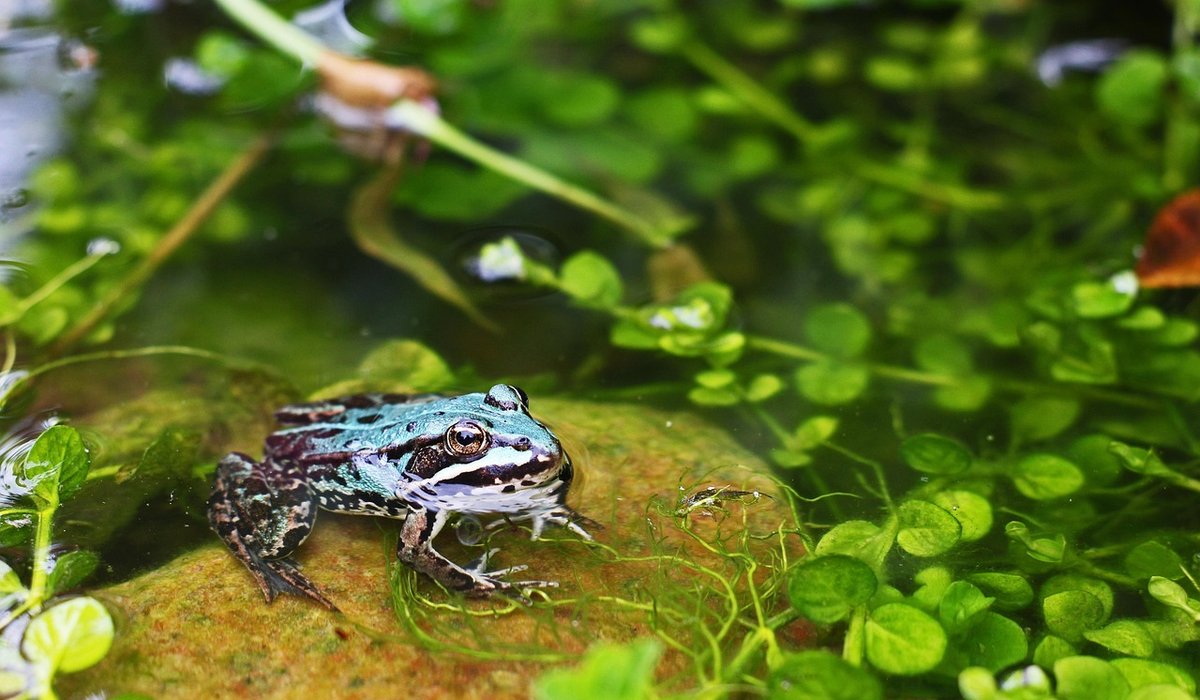
An immaculate pond is a poor winter habitat. Frogs and toads hibernate in the silt at the bottom or in damp leaf litter nearby, newts tuck themselves under stones and logs, and a whole community of insects, water snails and dragonfly nymphs overwinters in the margins and in plant debris. So leave a heap of leaves in a quiet corner, keep a small log pile near the bank, and resist clearing every last bit of silt unless it is genuinely reducing the depth.
- Never empty or thoroughly scrub a wildlife pond in autumn.
- Leave a sloping stone or a piece of roughened timber as an escape route for hedgehogs and other animals that wander in.
- Keep a shallow area free of netting so birds and mammals can still drink and bathe.
- Pile cut stems and leaves nearby rather than putting them in the green bin — they make excellent overwintering cover.
Small features, tubs and barrels — plus the kit
Small volumes of water change temperature fastest, so a half barrel or glazed pot needs a little more attention. Net it as you would a pond, top it up with rainwater from a butt rather than tap water, and float a ball or a small bundle of straw so that if it freezes, gases can still escape. Never smash ice on any pond: the shockwaves can injure fish. Instead, melt a hole by standing a pan of hot water on the surface.
Before leaf fall clogs things up, clean your pump intake and filter. If a pump feeds a waterfall, running it through winter keeps water moving and helps keep a hole open in the ice, but switch it off if it is stirring up silt or the pond is managed primarily for wildlife. Fountains, solar pumps and delicate ornaments are best lifted, cleaned and stored somewhere frost-free until spring. A little work now, and your pond will wake up in March ready for frogs, newts and another season of life.
tag: Seasonal

Tom Ashworth Author
Prevent ice from sealing the surface by floating a ball or using a heater. Keep a small opening for gases to escape and wildlife to breathe.
YOU MAY ALSO LIKE
Winterising Your Garden Pond to Protect Wildlife
Sep 5
10Clear debris, divide overgrown plants, and check pumps before warmer weather arrives. Test water quality and top up with rainwater if needed.
read more
Spring Pond Maintenance Checklist for Healthy Water
Sep 1
10Shade your pond with plants or a pergola, top up water levels, and avoid drastic water changes. Oxygen levels drop in heat, so keep pumps running.
read morePonds
-

ERRIC CATONA
Use a sturdy waterproof container, add gravel and native plants, and place it in partial shade. Even a tiny pond supports insects and frogs.
May 19, 2016 at 5.12 pm
Reply
ERRIC CATONA
Dragonflies need still water, emergent plants for perching, and nearby shelter. Avoid fish and pesticides to make your pond a successful breeding site.
May 19, 2016 at 5.12 pm
Reply -
ERRIC CATONA
Rainwater is free from chlorine and helps maintain natural pH. Collect it in a butt and add slowly to avoid disturbing pond life.
May 19, 2016 at 5.12 pm
Reply
Wildlife
Your email address will not be published.